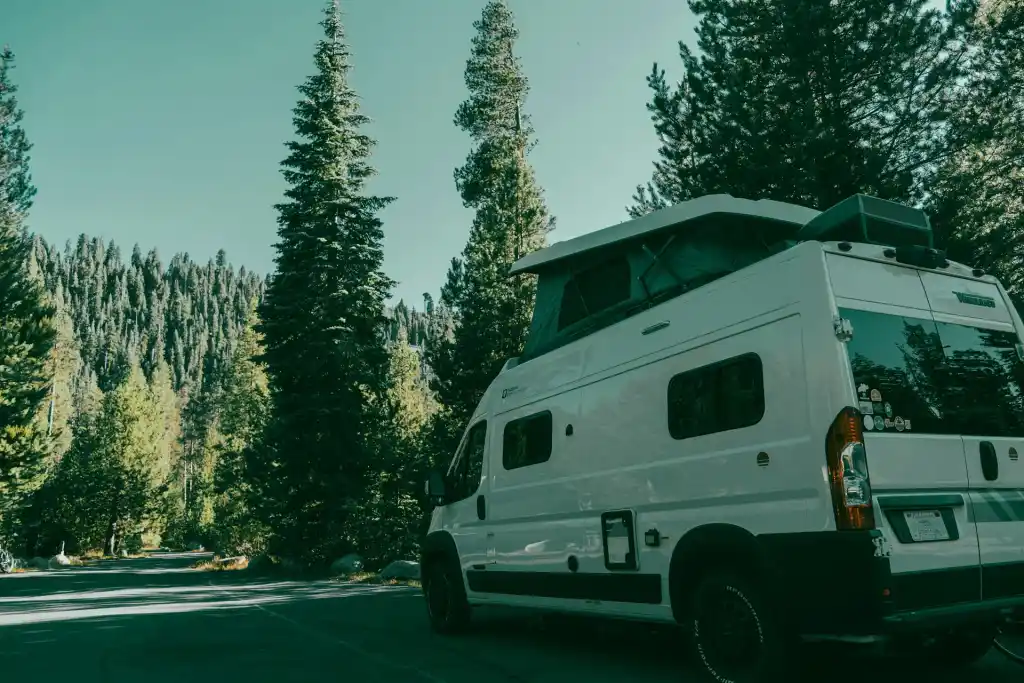
What does informal camping with a motorhome mean?
Informal camping is not a specific legal term. It usually means spending the night outside a campsite or organised motorhome stopover, often without access to electricity, water, toilets or disposal.
It may mean a night in an ordinary car park, a stop at a rest area or a secluded place where motor traffic and parking are allowed. The important thing is not what the place is called. Signs, traffic rules, the landowner’s rights and any local regulations decide whether you may stand there.
Can you camp informally with a motorhome in Sweden?
You can make a short overnight stop where the motorhome is legally parked, provided signs or local rules do not prohibit overnight stays or standing. Always read the signs when you arrive. A place that looks allowed on the map may be covered by conditions that are only shown on site.
That does not mean you may drive into the forest, onto the beach or other natural land, park on a private plot without permission, block a road or stay longer than the permitted parking time. Special rules may also apply in nature reserves, national parks and other protected areas.
Does the right of public access apply to motorhomes?
The right of public access gives broad opportunities to move through, pitch a tent and spend time in nature. It does not, however, give the right to drive or set up a motor vehicle off road. The Swedish Environmental Protection Agency counts forest, beaches, pastures, parks and lawns as terrain in this context, among other places.
With a motorhome, you therefore need to stay on roads and parking areas where motor traffic is allowed. The rules for tent camping cannot be transferred directly to a motorhome: the vehicle’s position must be legal first. A simple rule of thumb is that the right of public access can give you the right to be in nature, but not the right to drive the motorhome there.
Can you sleep in the motorhome in an ordinary car park?
If the motorhome is legally parked and the place’s conditions do not prohibit overnight stays, a short night in the vehicle may be possible. But there is an important difference between parking and using the place as a campsite.
Eating and sleeping inside the vehicle is one thing. Extending the awning, putting out tables and chairs, lighting the barbecue or taking up several parking bays makes the stop more like a camp. In an ordinary car park, you should therefore keep equipment inside, stay within the marked bay and follow the signed parking time. If you need more space, a motorhome stopover or campsite is a better fit.
How long may a motorhome stay parked?
How long you may stay depends on the place. Signs, supplementary plates and local traffic regulations override general assumptions. Check whether payment or a parking disc is required and whether special times apply to motorhomes.
At a rest area, according to guidance from the Swedish Environmental Protection Agency, you may usually stay for no more than 24 hours on weekdays. On Saturdays, Sundays and public holidays you can normally stay until the next weekday, unless something else is stated on site. Municipal car parks, harbours and private land may have other conditions.
Do not assume that several nights are allowed just because the sign does not use the word “informal camping”. If the rules feel unclear, a short stop is better than turning the place into a longer camp.
Informal camping in nature reserves and national parks
Nature reserves and national parks can have their own rules for parking, overnight stays, fires and visits. The regulations differ between areas. The fact that there is a road or car park inside the reserve does not automatically mean you may stay there overnight.
Read the information signs and check the area regulations with the responsible county administrative board or municipality. Never light a fire during a fire ban, and avoid barbecuing when the ground is dry, the place is sensitive or the wind is strong.
Private land and private roads
On a private road, the road owner decides whether motor traffic is allowed. A road may be open to drive on but still lack a suitable or permitted parking area.
Do not stand in farmyards, in front of gates, by boathouses or on surfaces clearly used by the landowner. If you want to stand close to a home, ask first, even if the stop is only for one night. A friendly conversation often gives a clearer answer than an unclear sign at dusk.
How to camp informally with consideration
Choose a place where the motorhome does not block roads, entrances, barriers or turning areas. Emergency services, forestry workers and landowners must be able to get through. Also avoid parking close to homes just because the view happens to be good.
Take all waste with you and empty the toilet and grey water only at a designated disposal station. Avoid loud music, long idling and generators close to other people. If you arrive late or leave early, do so as quietly as possible.
Informal camping is best for short overnight stays. If you want to stay several nights, use an awning and outdoor furniture or need electricity, showers and disposal, an organised motorhome stopover or campsite is often the better choice.
Informal camping, motorhome stopover or campsite: which is best?
Informal camping suits you when you can manage without service, only need a place for the night and are prepared to check the rules on site. A motorhome stopover suits you when you want a clearly designated motorhome pitch and perhaps access to electricity, water or disposal.
A campsite suits you when you want to stay longer, use an awning and outdoor furniture or be close to showers, kitchens and activities. One is not finer than the other. Sometimes a quiet overnight stop is exactly what the trip needs; sometimes fresh water and a warm shower are worth every krona.
Checklist before you stop for the night
Check that you may drive and park at the place, how long you may stay and whether payment or a parking disc is required. Look for signs that prohibit motorhomes, camping or overnight stays, and find out whether the place is in a protected area.
Also make sure you are not blocking a road, entrance, barrier or turning area, that you stay within the parking surface and that the stop does not disturb residents or other visitors. Finally, ask yourself whether you can leave the place exactly as you found it. If anything feels doubtful, it is wise to drive on.
Common questions about informal camping with a motorhome
Can you camp informally with a motorhome anywhere? No. The motorhome must stand where motor traffic and parking are allowed. Signs, local traffic regulations and off-road driving rules must be followed.
Can you sleep in a motorhome in a car park? A short overnight stop may be possible if the motorhome is legally parked and the place does not prohibit overnight stays or standing. Always follow signs and parking times.
Does the right of public access apply to motorhomes? The right of public access does not give the right to drive or set up the motorhome off road. You need to stay on roads and parking areas where the vehicle may be driven and parked.
Can you put tables and chairs beside the motorhome? In an ordinary car park you should avoid it. Furniture, awning and barbecue make the stop more like camping and may conflict with the place’s conditions.
Can you camp informally in a nature reserve? That depends on the reserve’s regulations. Always check the signs and information from the responsible county administrative board or municipality.
Freedom depends on consideration
Informal camping with a motorhome can be simple, quiet and absolutely wonderful. But the freedom depends on following the signs, respecting the land and not leaving a larger trace than necessary.
Park legally. Keep the stop small. Take everything with you when you leave. Then there is a chance that the next traveller can wake to the same view too.