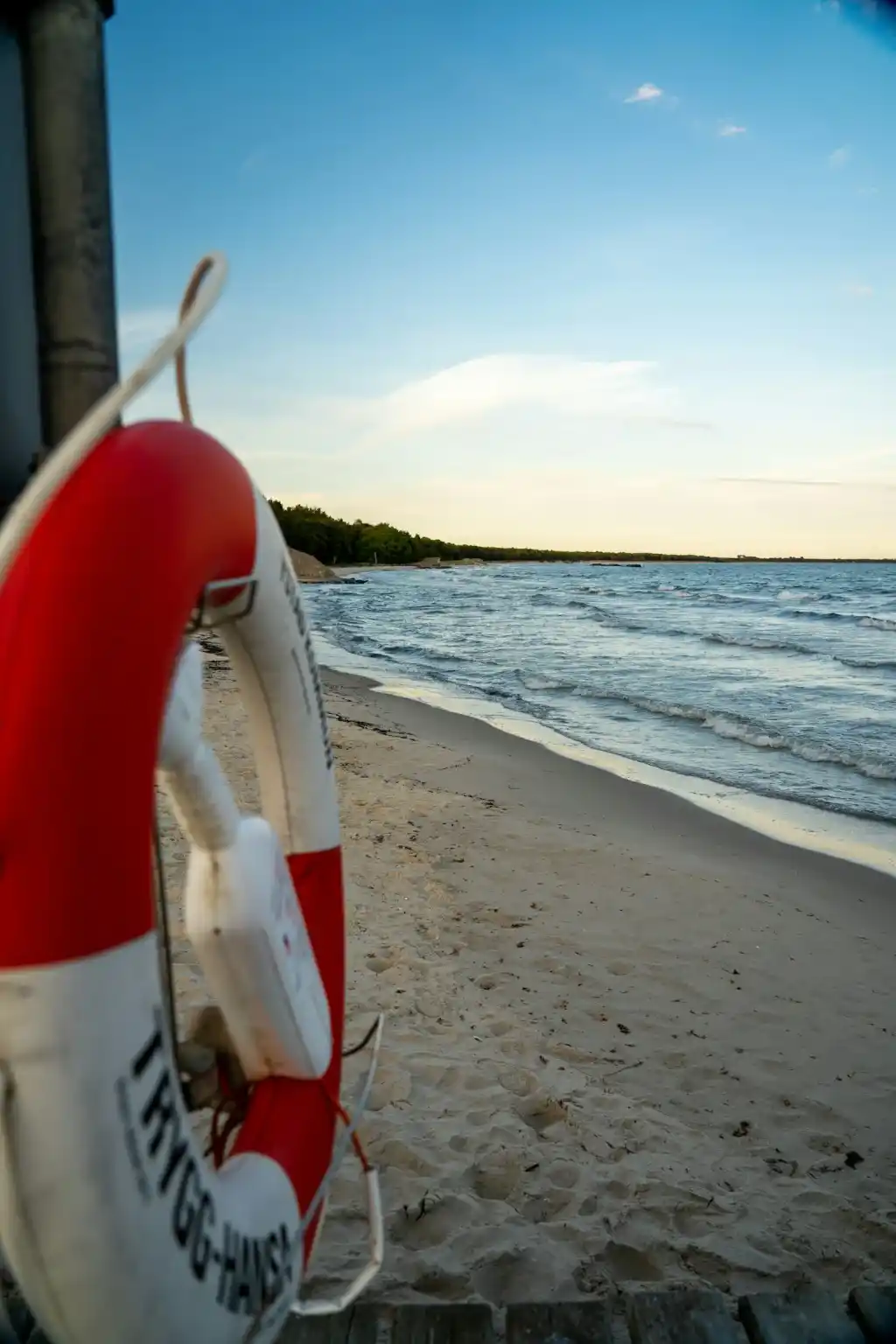
Water slows the trip in the right way
Some places work practically and some places change the pace. Waterside stops often do both. You get something simple to walk towards after the levelling ramps are in place: a jetty, an evening swim, an ice-cream kiosk that has almost closed or just that low horizon that makes your shoulders drop.
For motorhome travellers, it is also a rewarding rhythm. Seas, lakes and harbours are often close to promenades, swimming spots, small centres or guest-harbour service. That can make a single night feel like more than a stop on the way.
Coastal locations: come for the light, plan for demand
The coast is, of course, the great attraction. Small-boat harbours in Skåne, Halland’s long evenings, Bohuslän’s rocks and the more open east-coast locations all share the same basic feeling: you arrive and immediately understand why others want to stand there too.
For that reason, the sea needs a little more planning. In peak summer, popular harbour places fill early, and rules can differ between a municipal car park, a guest harbour and a campsite with special motorhome pitches. Have a backup nearby, arrive before supper rather than after sunset and always check whether overnight stays are actually allowed.
Lakes often give more calm per kilometre driven
Lake places are easier to overlook, but they are often where the trip takes its softest shape. A smaller campsite by a swimming area, a municipal motorhome stopover near a jetty or a simple place by a watercourse can give almost the same water feeling as the coast, but with fewer vehicles queuing and shorter distances to forest, walking and minor roads.
It is especially smart if you travel with children, a dog or swimwear that never quite has time to dry. The lake makes the stop useful all day: morning dip, lunch in the shade, evening walk and a night where the wind more often drops than by open sea.
The harbour is the motorhome’s little town hotel
Guest harbours have a particular kind of holiday logic. They are close to the water, but also close to things you actually need: toilets, showers, restaurant, grocery shop, ice cream and an evening stroll where you can look at boats without pretending to be more nautical than you are.
For a shorter motorhome trip, the harbour can be perfect. You get closeness to the place without having to find parking for the whole vehicle the next day. The disadvantage is the same as the advantage: it can be social, tighter and livelier than a forest lake. Choose a harbour when you want movement around you, not when you long for total silence.
Look for service before you look for the sunset
A waterside place quickly becomes less romantic if the battery is low, the fresh water is finished or the toilet cassette needs emptying. Start with the evening’s needs: electricity, water, toilet, shower, chemical toilet disposal or simply a safe place where overnight stays are clearly allowed.
Once the practical side is solved, you can choose the feeling. Do you want to wake with sand between your toes, walk straight out onto a jetty or have ten minutes to a café? That order sounds duller than it is. In reality it makes the trip freer, because you avoid changing place when evening has already begun.
How to use Campingkollen to find waterside stops
Start on the map and zoom in along the coast, lakes and rivers in the area you already plan to travel through. Then filter by place category and service instead of only chasing the bluest part of the map. A motorhome stopover with the right location but the wrong service can work for one night; a campsite by water can be better when you want to stay two or three.
It is worth saving two alternatives: one with a view and one with margin. Then weather, tiredness and high season can have their say without the trip losing its shape. That is often when the best water stops happen, not when everything is perfect, but when you have planned just enough to let go.