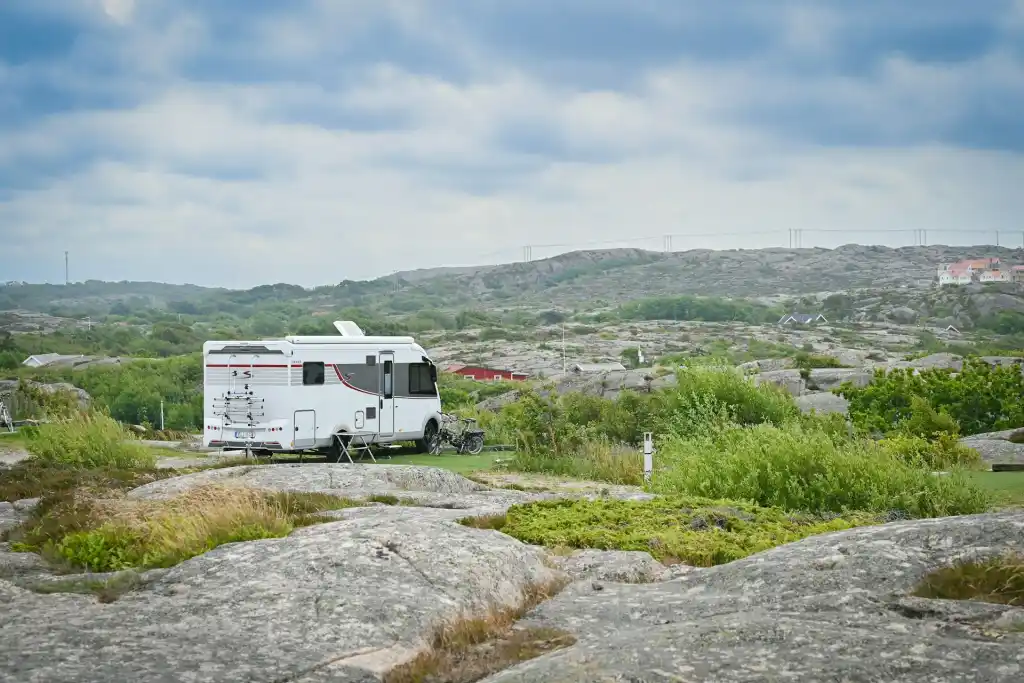
An island made for the pace of a motorhome trip
Öland belongs to Kalmar County and is reached by the Öland Bridge from Kalmar, making it one of Sweden’s most accessible island destinations for motorhomes. No ferry to catch, no booking for the crossing. You roll across Kalmarsund, land in Färjestaden and then have the whole island ahead: World Heritage landscape and bird areas in the south, Borgholm and the castle ruin in the middle, fishing harbours and shallow sandy beaches in the north.
The distances are short but the content is dense. From the bridgehead to Ottenby at the far south is just over seventy kilometres, and to Byxelkrok in the north about the same. That means you can do Öland as a long weekend, but also that a week fills without effort, because almost every ten kilometres has a swimming spot, harbour or windmill arguing for a stop.
Färjestaden and the bridgehead: the natural start
Many Öland trips begin and end around Färjestaden, and there are good reasons to stay longer than a refuelling stop. KronoCamping Saxnäs is by Kalmarsund very close to the bridge and works as a classic full-service base: electricity, fresh water, chemical toilet disposal, shower and toilet, practical both on the first evening when you want to get settled and on the last night before the drive home.
If you would rather stand more simply and quietly, Qvibergs Ställplatser in Bröttorp just outside Färjestaden is an option. It is a small place with seven pitches, four of them with electric hook-up, plus fresh water, waste handling and a barbecue area. There is no toilet or shower, so it suits self-sufficient crews best, but dogs are welcome and the season runs roughly from early spring to October. That kind of small, uncomplicated motorhome stopover is often exactly what you want when campsites are full in July.
Southern Öland: World Heritage, alvar and migrating birds
South of Färjestaden, the agricultural landscape of Southern Öland opens up, one of Sweden’s World Heritage Sites, where row villages, coastal meadows and the wide Stora alvaret create a feeling unlike anywhere else in the country. Haga Park Camping och Stugor in Mörbylånga is close to swimming, restaurant and service, a good location for anyone who wants to explore the World Heritage area by bike or on foot.
On the south-east side, Stenåsa Stugor och Camping meets both the Baltic shoreline and the alvar land inland, a combination that makes morning walks hard to beat. And at the far south, Ottenby Vandrarhem och Camping waits near Ås church and Ottenby. The bird areas around Öland’s southern cape are among the island’s great nature experiences, especially in spring and autumn when migration passes through.
Borgholm and the gentle middle ground
On the way north along the western side you pass Stora Rörs guest harbour, a quiet little harbour between Färjestaden and Borgholm that works well as an intermediate stop when you want an evening swim and the sound of boats without town bustle. Settings like this are Öland’s quiet strength: small, close to water and seldom as heavily pressured as the big sites.
Borgholm is the island’s summer capital, and the motorhome stopover by Borgholm Castle places you right beside the mighty ruin, within walking distance of the town’s restaurants and shops. Waking with the ruin as your neighbour and drinking morning coffee before the day’s visitors arrive is the kind of location that makes the stopover format so rewarding: close to everything, but with the freedom of the motorhome intact.
Northern Öland: fishing harbours, sandy beaches and Byxelkrok
Northern Öland changes character. On the east coast, Kårehamn is a municipal motorhome stopover in an active fishing harbour with service, swimming, fish shop and restaurant. Smoked fish for supper and the Baltic outside the window is a hard evening programme to beat. It is also a good example of how Öland harbours often offer more than just a parking bay.
Up by Bödabukten, Böda Sand spreads out, one of Sweden’s major campsite resorts, known for its shallow sandy beach, the right choice for families with children and anyone who wants to stay several days with full service. And at the far north-west, Byxelkrok sits by Kalmarsund, with a stopover location close to the guest harbour, restaurants, café and service. From here it is close to Neptuni åkrar and the sea stacks at Byrum, and the evening sun over the sound does its part to make you postpone the journey home by another day.
Plan well: season, pressure and the limits of public access
Öland is intense in peak summer. Around Midsummer and in July, campsites and popular stopovers fill early in the day, so book the large sites in advance and always have a backup stop, preferably a smaller stopover or harbour a little away from the best-known locations. Early and late season are the island’s hidden advantage: May, June and September offer open roads, flowering alvar and bird migration respectively, and many places have a season from spring to October.
Remember too that the right of public access does not give the right to put the motorhome anywhere: large parts of Öland are agricultural landscape, nature reserve and World Heritage area, and free overnight stays with vehicles are limited in practice. Choose organised motorhome stopovers, campsites and harbours. There are many, they are close together and they help the island stay welcoming. Always check current prices, opening hours and overnight rules before you drive; they change quickly in popular coastal resorts.